A Guide to One of Wales’s Greatest Birding Destinations
The Llŷn Peninsula is one of those rare places where world-class birdwatching happens almost by accident. You come for the beaches, the walks, the fish and chips — and then a chough swoops past with its crimson bill catching the light, and suddenly you’re hooked.
From the dramatic seabird cliffs of the north coast to the legendary Bardsey Island bird observatory at the peninsula’s tip, the Llŷn offers an extraordinary diversity of habitats packed into a compact, walkable landscape. Whether you’re a seasoned twitcher chasing rarities or a family who just bought their first pair of binoculars, there’s something here for you.
Bardsey Island: Wales’s Only Bird Observatory
No conversation about birding on the Llŷn starts anywhere other than Bardsey — or Ynys Enlli, the “Island in the Currents.” Lying just two miles off the peninsula’s southwestern tip, this tiny 180-hectare island has been the only accredited bird observatory in Wales since its establishment in 1953, and in that time it has recorded over 300 species.
Bardsey’s position at the end of the peninsula makes it a natural funnel for migrating birds. Every spring and autumn, huge numbers of willow warblers, chiffchaffs and goldcrests pass through. But it’s the rarities that make twitchers’ hearts race. Over the decades, the island has welcomed visitors from across the globe: eyebrowed thrush and Radde’s warbler from Asia, black-browed albatross from the southern oceans, and American species including dark-eyed junco, yellow warbler and song sparrow. The island also holds Britain’s only record of several vagrant species.
The resident breeding population is impressive in its own right. Bardsey is home to between 10,000 and 16,000 pairs of Manx shearwater — strange, burrowing seabirds that spend their days far out at sea and return to their burrows only after dark, filling the night with an eerie cacophony that sounds, as one writer put it, like fighting alley cats. The east face of the island’s mountain hosts 11 species of breeding seabird including kittiwakes, storm petrels, razorbills and guillemots, while oystercatchers, wheatears, little owls and long-eared owls nest across the island’s grasslands and rocky fringes.
Boat crossings to Bardsey run from Porth Meudwy, weather permitting, and the 20-minute ride through the swirling currents of Bardsey Sound is an experience in itself. Self-catering accommodation on the island can be booked through the Bardsey Island Trust, and staying overnight is the only way to experience the shearwaters’ remarkable nocturnal homecoming.
The Mainland Cliffs: Carreg y Llam and Beyond
You don’t need to cross the sea to find spectacular seabird colonies. The 100-metre high cliffs of Carreg y Llam, near the tiny church at Pistyll on the north coast, are one of the most important seabird nesting sites in North Wales. During the breeding season from April to July, the ledges are packed with guillemots standing shoulder to shoulder, razorbills tucked into crevices, and kittiwakes on their neat mud nests, filling the air with their namesake call.
The coastal path between Trefor and Nant Gwrtheyrn offers some of the best cliff-top birding on the peninsula. Walk quietly and scan the rocks below — you might spot a peregrine falcon hunting along the cliff face, or hear the distinctive “chee-ow” of a chough before you see it tumbling acrobatically on the updrafts.
The Chough: Llŷn’s Red-Billed Star
The red-billed chough deserves special mention. It’s the rarest member of the crow family in Britain, and its Welsh name — brân goesgoch, the “red-legged crow” — gives you a sense of how fondly it’s regarded here. Three-quarters of the UK’s entire chough population lives in Wales, and the Llŷn Peninsula is one of their strongholds.
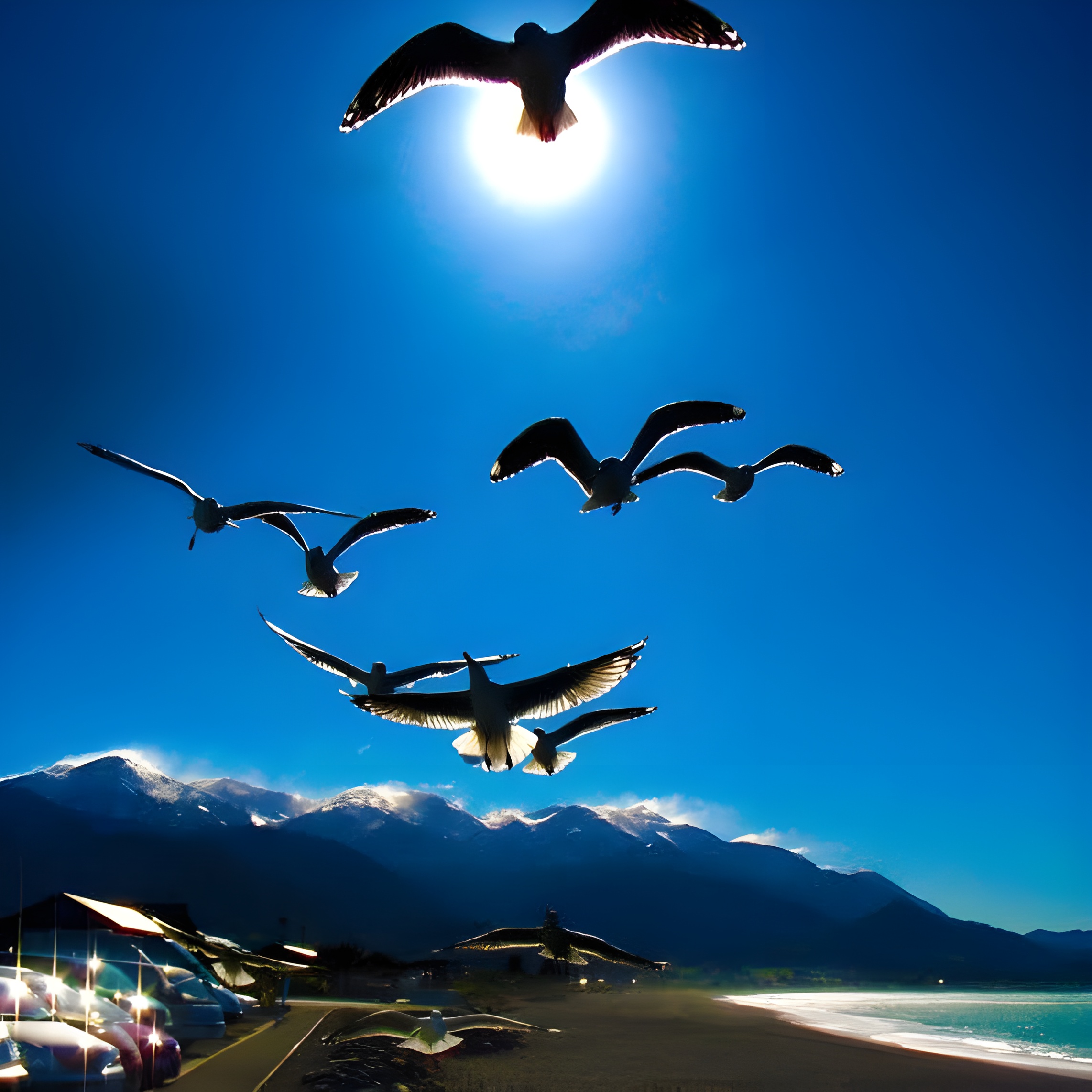
Pen y Cil, the dramatic headland at the southern tip of the peninsula overlooking Bardsey Sound, is one of the best places in Britain to watch choughs. They’re often seen in pairs or small groups, probing the short coastal turf for insects with their curved red bills, or performing breathtaking aerial displays — folding their wings to plummet earthward before pulling up at the last moment with a flourish. Late afternoon, when the light catches their glossy blue-black plumage and that impossible bill, is the best time to appreciate just how striking these birds are.
Inland and Coastal Habitats
Away from the cliffs, the Llŷn rewards patient observers with a different cast of characters. The heathland and coastal dunes around Morfa Nefyn and Abersoch are home to stonechats perching on gorse bushes, goldfinches working the thistle heads, and sand martins nesting in sandy banks.
The wooded valleys — particularly around Plas Glyn y Weddw and the Nanhoron estate — shelter greater spotted woodpeckers, green woodpeckers, jays and nuthatches. Keep your ears open for the woodpecker’s drumming in spring, or the green woodpecker’s laughing “yaffle” call echoing across the fields.
Overhead, kestrels hover on the sea breeze and buzzards circle on thermals, while in winter, hen harriers and merlins quarter the marshland around the Glaslyn estuary at the eastern edge of the peninsula.
## When to Visit
The Llŷn offers excellent birding year-round, but the peak seasons are spring (April to early June) for breeding seabirds and arriving migrants, and autumn (late August to late October) for passage migrants and the chance of rare vagrants blown off course. September to December brings the grey seal pupping season along the coast, and watching seals from the cliff top while scanning for passing skuas and shearwaters offshore makes for a memorable autumn day.
Winter is quieter but far from empty. Flocks of redwings and fieldfares strip the hedgerow berries, purple sandpipers and turnstones work the rocky shoreline, and the estuaries hold curlew, oystercatchers and the occasional greenshank.
## Essential Kit and Tips
Bring binoculars — even a modest pair transforms a coastal walk. A telescope on a tripod is worth its weight for seawatching from headlands like Mynydd Mawr or Pen y Cil. Wear layers (the peninsula catches every breeze off the Irish Sea) and carry a field guide. The Collins Bird Guide is the standard, but the Merlin bird identification app on your phone is brilliant for identifying songs and calls you can’t place.
Most importantly, take your time. Find a sheltered spot on the cliff top, sit still, and let the birds come to you. On the Llŷn, they always do.
*Discover more about the wildlife, walks and businesses of the Llŷn Peninsula at llyn.live — your local guide to Pen Llŷn.*
Leave a Reply